Mt Fuji Cherry Blossom 2026: When & Where to See Sakura
|
posted by WANGKIRA

The Mt Fuji cherry blossom season is Japan’s peak tourist period, but the timing is one of the least predictable. While cherry blossoms in Tokyo typically reach their peak bloom in late March, the Fuji Five Lakes region—situated 800 meters above sea level—experiences a cooler climate, delaying the blossoms by 7 to 10 days.
To visit Mt. Fuji during cherry blossom season in 2026, it is crucial to understand the predicted bloom dates and make good plans to manage the large number of visitors drawn to Yamanashi Prefecture. The following information can help ensure a successful and enjoyable visit.
Table of Contents
When to See Cherry Blossoms in Mount Fuji?

Japan Meteorological Corporation (JMC) has released the 2026 national cherry blossom forecast, which covers major cities such as Tokyo, Nagoya, and Fukuoka. Tokyo’s first bloom is around March 20, with full bloom expected around March 27. If you’re planning a Mt Fuji day trip from Tokyo, this timing helps you estimate when cherry blossoms around the Fuji Five Lakes will be at their peak.
However, the official forecast does not provide specific dates for the Mount Fuji area. But due to the higher elevation and lower accumulated winter temperatures, the Fuji Five Lakes region generally blooms about 7 to 10 days later than Tokyo.
Cherry blossom timing around Mount Fuji can vary each year, so travelers often prioritize flexibility over fixed schedules. Some guided tours adjust their routes based on daily bloom conditions—helping visitors see Sakura at its best even when spring weather changes.
 ¥1,026.00
¥684.00
¥1,026.00
¥684.00
Where to See Sakura with Mount Fuji: Best Viewing Spots
To see the blossoms and the mountain in a single frame, you must be on the north or northeast side of the peaks. Here are the four primary locations in Mount Fuji, ranked by their photographic value and accessibility.
Chureito Pagoda (Arakurayama Sengen Park)

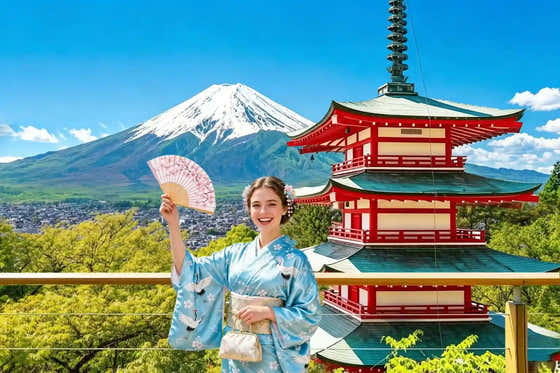
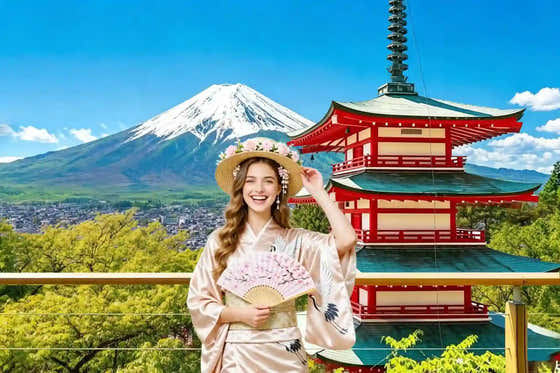
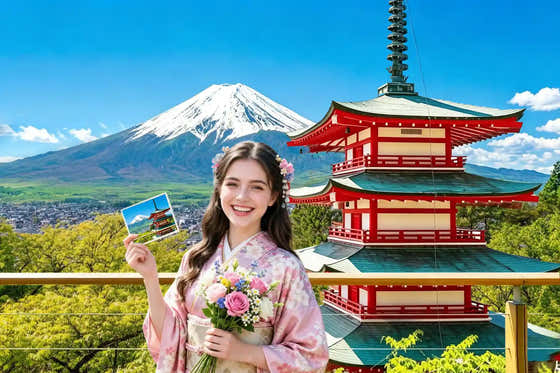
This is the most iconic view in Japan, featuring the five-storied red pagoda, the Sakura, and the symmetrical cone of Mt. Fuji.
How to get there: From Shimoyoshida Station, it is a 15-minute walk to the base, followed by a climb of 398 steps (the "Sakuya-hime" steps). There is a sloped ramp for those who cannot do stairs, but it takes longer.


Professional Photography Tip: Use a focal length between 50mm and 85mm. This "compresses" the layers, making Mt. Fuji look significantly larger behind the pagoda. The morning sun (before 9 AM) illuminates the pagoda’s face; in the afternoon, it becomes a silhouette.
2026 Crowd Alert: During peak bloom, a ticketing system is usually in place. You will be given a color-coded ticket and allowed 5 minutes on the observation deck.

Lake Kawaguchiko North Shore

This is the heart of the Mt Fuji cherry blossom experience, specifically the 1.2km stretch between the Kawaguchiko Music Forest Museum and the Oishi Park entrance.
This area hosts the Fuji-Kawaguchiko Cherry Blossom Festival. You’ll find over 200 Yoshino cherry trees lining the walking path. This is the best spot for "reflected Fuji" shots if the lake is still.

Both landmarks are easily searchable on Google Maps: “Kawaguchiko Music Forest Museum” (starting point) and “Oishi Park” (endpoint). Walking from the museum to Oishi Park typically takes 20–30 minutes at a relaxed pace, giving you multiple opportunities to frame the perfect Fuji and cherry blossom shot.
Google map: Kawaguchiko Music Forest Museum
Google map: Oishi Park
Oshino Hakkai

A UNESCO World Heritage site consisting of eight ponds fed by Mt. Fuji’s snowmelt, Oshino Hakkai feels like a step back into a traditional Japanese village. In spring, the combination of crystal-clear ponds, wooden bridges, and blooming cherry trees makes it a perfect spot for photography.
Where to see cherry blossom: Walk along the Shinnashogawa River next to the ponds. Hundreds of cherry trees line the banks, and the wooden bridges provide beautiful foregrounds. For a striking shot, try capturing the blossoms reflected in the pond water.
Insider Food Tip: Don’t miss the local Kusa Dango (green mugwort mochi filled with red bean), grilled over charcoal on-site. It’s a springtime staple at Oshino Hakkai and pairs perfectly with a stroll along the cherry-lined river.

Visit in mid-April for peak bloom, and go early to avoid crowds. It’s about a 40-minute bus ride from Kawaguchiko Station.
 ¥536.00
¥342.00
¥536.00
¥342.00
Saiko Iyashi no Sato Nenba

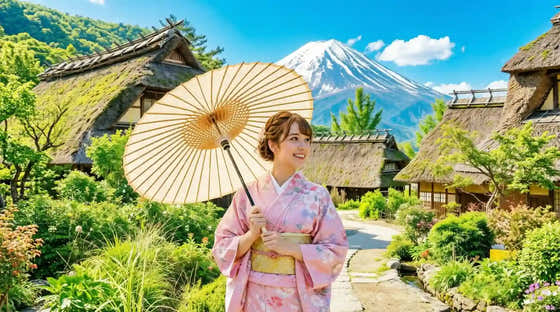
Nestled on the western shores of Lake Saiko, Saiko Iyashi no Sato Nenba is a charming reconstructed “Healing Village,” built on the site of a village destroyed by a landslide in 1966. The village features 20+ thatched-roof houses, giving it a rustic, storybook-like atmosphere.
What makes this spot truly special in spring are the Shidarezakura (Weeping Cherry Trees). Their deeper pink blossoms bloom slightly later than the surrounding white Yoshino trees, creating a layered, almost magical scene against the backdrop of Mt. Fuji.
Activities & Tips:
- Rent a kimono or samurai armor for roughly 2,000 yen and stroll the village grounds—perfect for immersive photos.
- The village is a bit farther from the main Kawaguchiko hub, so crowds are about 40% lighter, letting you enjoy a peaceful stroll.
- For the ultimate view, climb to the top-most house (#22). From there, you can frame the thatched roofs, pink weeping branches, and Mt Fuji in a single vertical shot.
Visit in mid-April for peak bloom, and take your time wandering the slopes; the combination of traditional architecture, pink weeping cherry trees, and Fuji in the background is one of the most photogenic spots around the lake.
Mt Fuji Cherry Blossom One-Day Itinerary

For 2026, we recommend a “West-to-East” route around Mt Fuji’s cherry blossom spots. This sequence follows the sun for the best photos and hits the more remote locations before the big tour buses arrive from Tokyo.
Morning to Afternoon: Anti-Crowd Flow
| Time | Location | Advantage |
|---|---|---|
| 10:00 AM | Saiko Iyashi no Sato Nenba | Start early at this westernmost village. By 10 AM, it’s peaceful and quiet, letting you wander among the thatched-roof houses and pink weeping sakura without jostling through crowds. The light is soft and perfect for photos. |
| 11:30 AM | Lake Kawaguchiko North Shore | Mid-morning is ideal: the festival stalls are fully open, the lake is calm, and Mt Fuji often pops above the cherry trees before afternoon clouds roll in. It’s your chance for those classic Fuji and blossoms shots with reflections. |
| 01:00 PM | Oshino Hakkai | The bright afternoon sun penetrates the ponds, making the water crystal-clear and the trout inside vivid for photos. Strolling along the Shinnashogawa River lined with cherry trees is a relaxing contrast to the busier lakeside areas. |
| 03:00 PM | Chureito Pagoda | Arrive later in the afternoon to dodge the early morning crowds. The lines are shorter, and the “Golden Hour” casts a warm glow over the pagoda and cherry trees—perfect for dramatic vertical shots with Mt Fuji in the background. |
Why This Route Works
During peak sakura week, the roads around Kawaguchiko Bridge can get packed with cars and buses. Starting at Saiko Nenba and moving east lets you move against the main traffic flow, avoiding the busiest moments.
Tip: Taking public buses along this route is tricky—mid-route stops often fill up fast. Our Mount Fuji cherry blossom one-day tour uses private transport, so you can focus on the scenery and photos instead of waiting in lines.

Tips for Visiting Mount Fuji During Cherry Blossom Season

- Transport Logistics: The Fuji Excursion Limited Express from Shinjuku is the only direct train. It sells out instantly. You must book exactly 30 days in advance via the JR East website.
- The "Bus Trap": While highway buses from Shinjuku are cheaper, heavy cherry blossom traffic can turn a 1.5-hour trip into a 4-hour ordeal. If you use the bus, take the earliest possible departure (before 7:00 AM).
- Clothing: Don’t be fooled by the spring sun. Temperatures at the base of Mt. Fuji are usually 5–7°C lower than in Tokyo. A windbreaker and light layers are essential, especially when standing still for photos.
- Photography Tips: Tripods are often banned on the Chureito Pagoda observation deck during the festival. Bring a monopod or be prepared to shoot handheld.
Mt Fuji Cherry Blossom FAQs
When is the best time to see cherry blossoms in Kawaguchiko in 2026?
The peak is expected between April 6 and April 13, 2026. This is generally 7 to 10 days after Tokyo's peak bloom due to the higher elevation.
Where can I see cherry blossoms in Kawaguchiko for free?
Most of the best spots are free! The entire North Shore walking path (where the festival is held) and Arakurayama Sengen Park (Chureito Pagoda) have no entrance fees, though some specific museums or village areas like Saiko Iyashi no Sato Nenba require a small ticket fee.
How do I check the live bloom status?
You can use the Fujigoko official live cameras or check daily updates on sites like weathernews.jp and the Yamanashi Prefectural tourism website starting in late March.
Is it worth going if it’s cloudy?
Yes. While you might not see the peak of Mt. Fuji, overcast light is actually better for photography as it reduces harsh shadows and captures the saturated pink of the petals more vividly. Plus, the clouds around Fuji often move quickly, and the mountain may reveal itself for a few minutes.
Plan Your 2026 Mount Fuji Cherry Blossom Trip
The Mt Fuji Cherry Blossom window is the shortest and most competitive travel season in Japan. For 2026, the key is early booking and morning-heavy scheduling.
Next Steps for Your Trip:
- Check the Forecast: Monitor the JMC starting in February 2026.
- Secure Transport: Book Fuji Excursion tickets 30 days ahead.
- Join a Tour: Reserve Mount Fuji cherry blossom one-day tours to ensure you see the best spots without the logistical headache.
You might also be interested in ...
- Mt Fuji Tour 2026: 12 Best Things to Do & Local Tips
- Kyoto Cherry Blossom 2026: Forecast, Best Spots & Itineraries
- How to Get to Mt Fuji from Tokyo?
- The Ultimate Japan Cherry Blossoms Guide to Full Bloom
- Mt Fuji Day Trip from Tokyo: 5 Best Itineraries
- Can You See Mt Fuji from Hakone?
- When is Mt Fuji Visible? 2026 Visibility Guide
- Can You Ski or Snowboard on Mt. Fuji?
-
Hakone vs Kawaguchiko: Which is Better for Your First Mt. Fuji Trip?
- Mt Fuji Autumn Leaves 2026