12 Best Things to Do in Mt Fuji (2026 Guide)
|
posted by WANGKIRA
Mount Fuji is more than a mountain; it’s a moody monument. On days when the weather is clear, she is magnificent. On days when it is cloudy, she is hidden from sight.
Based on feedback from 1000+ guided tours in Mount Fuji, I've found that timing is everything when it comes to determining what constitutes a "good" experience versus what constitutes "bucket list" experiences.
If it’s your first time visiting, this is your "cheat sheet." I'll walk you through the crowds of 2026, point out the best spots to take pictures, and explain why, every now and then, the best way to see Fuji is to leave the driving to someone else.
Table of Contents (Click to Collapse)
Mt Fuji Tour 2026: 12 Best Things to Do & Local Tips

How to get to Mt. Fuji from Tokyo?
Where is Mount Fuji located?
It is situated on the border of Yamanashi and Shizuoka prefectures. It is 100 kilometers (62 miles) southwest of Tokyo. Mount Fuji itself is very large, but most people go to the Fuji Five Lakes (Fujigoko) area, particularly Lake Kawaguchiko.
How far is the drive?
This train journey will take you around 2 to 2.5 hours. But if you find yourself traveling on the weekends or a public holiday, the Chuo Expressway might turn into a car park, thus taking you up to 4 hours.
For tips on how to escape these traffic traps and find the fastest route to take, see our ultimate guide on How to Get to Mt Fuji from Tokyo.
| Method | Travel Time | Cost (Approx.) | Ideal For |
|---|---|---|---|
| JR Fuji Excursion | 2 hours | ¥4,000 one-way | Solo travelers who hate traffic. |
| Highway Bus | 2-2.5 hours | ¥2,700 – ¥3,500 one-way | Budget travelers (book early!). |
| Guided Day Tour | Full Day | From ¥7,200 all in one | Families & photographers wanting to see 5+ spots without the logistics stress. |
If you’re looking to maximize your day without worrying about train transfers or missing the last bus, read all the reviews and book day tours here—it’s the most efficient way to see the highlights.
Best Mt Fuji Viewpoints for First-Timers
If it’s your first time, these are the "Postcard Shots" you have come for.

Don't miss out!
Want to hit all these icons in one go?
Most of our guests choose this Mt Fuji tour that has 10000+ reviews on all platforms because it handles the timing perfectly for the best light.
CHECK AVAILABILITYChureito Pagoda & Arakurayama Sengen Park

View of Chureito Pagoda with Mt Fuji
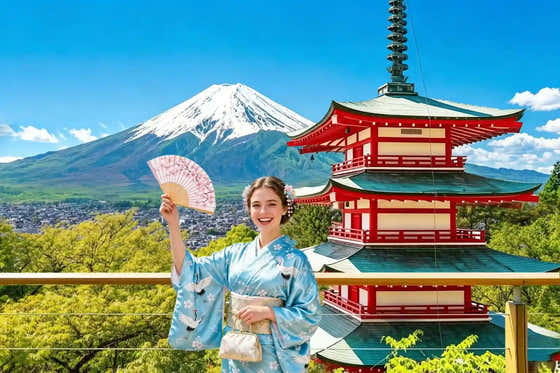
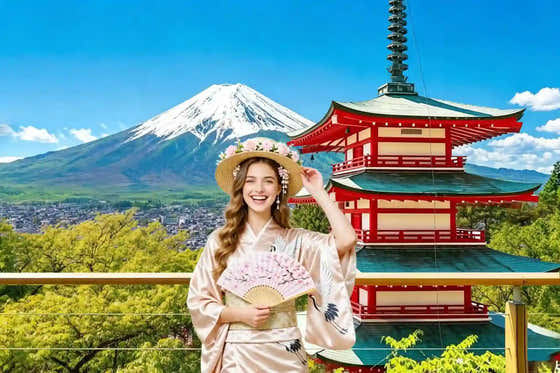
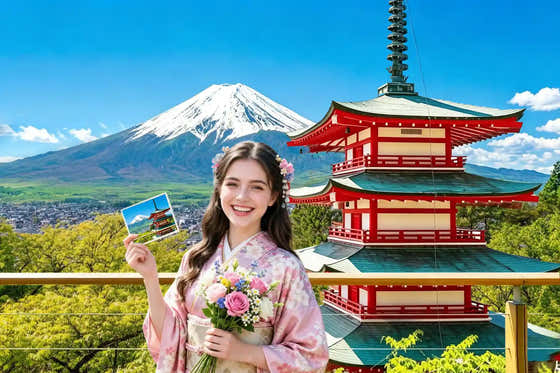
This is the shot: a red five-story pagoda, cherry blossoms (in spring), and Mt. Fuji in the background.
Chureito Pagoda Interesting Facts: Chureito Pagoda was built in 1963 as a peace memorial rather than an ancient temple. Despite its modern construction, its hillside location offers one of the most iconic views of Mount Fuji, especially during cherry blossom season in spring.
How to get there: Take the Fujikyu Railway from Kawaguchiko Station to Shimoyoshida Station (15 mins), then walk 10-15 minutes to the park entrance.
You have to climb 398 steps. There is no elevator. Take your time, breathe the mountain air, and look back—the view gets better with every step.

If you'd rather skip the stress of navigating local train transfers and save your energy for the climb, most visitors find it much easier to book this tour here, as it provides direct transport from Tokyo to the park entrance.
Hikawa Clock Shop (Honcho Street)

Honcho Street view towards Mt Fuji
This "Stairway to Fuji" street view spread like wildfire on Instagram. The juxtaposition of the mountain towering above the traditional shop signs creates a surreal effect.
Location: Within a 5-minute walk from Shimoyoshida Station.
“Safety Warning: Note that this street is live and busy, and as a safety measure, the authorities have now placed guardrails and security to ensure that pedestrians do not stand in the middle of the road.
How about a photography tip for you when you come to this street to capture the beauty of the structure in a photo? Use a telephoto lens shot taken only on the sidewalks.” You can join a guided tour to visit this street at the right time for photography.

Lawson Kawaguchiko (2025/2026 Barrier Update)

"Mt Fuji on the rooftop of Lawson"
This is the most famous convenience store in Japan since people enjoy the contrast between modern living and natural mountain views.
The Reality of 2025/2026: In late 2025, a 1.4-meter brown barrier was added to deter people from jumping into traffic. I visited this area recently. The positive news is that this area is “View-friendly but Road-safe.” You can view the mountain beyond the barrier. However, you are not supposed to go beyond the line.
Hidden Gem: Do NOT congest the station branch! Walk 15 minutes to the Kawaguchiko Town Hall Office Branch. Much less crowded, same ‘Fuji on the rooftop’ experience, and 50% fewer visitors.
If navigating transport and timing feels inconvenient, many visitors find that a guided day trip from Tokyo is the easiest way to reach the best-positioned Lawson store.
Things to Do in Lake Kawaguchiko
Mt Fuji Panoramic Ropeway (Mt. Tenjo)

If you want the real bird’s-eye perspective of Lake Kawaguchiko and the sheer scale of Mt. Fuji, this is the place to be. A cable car ride that takes merely three minutes propels you to an elevation of 1,075 meters to the observation deck of Mt. Tenjo.
As the gondola climbs, the waters of the lake stretch out before your eyes. And as soon as you step out, Mt. Fuji stretches out before your awestruck eyes.
How to purchase your tickets: There is a ticket office at the base station, right by the lake. You have automatic ticket machines there that accept both cash and IC cards (such as Suica). A round-trip ticket now costs ¥1,000 for adults (don’t forget to hold on to your return ticket!).
Expert Logistics & Wait Times: Here is the “insider” reality: This is the most popular view within walking distance of the train, so be prepared for some crowds. Wait times are terrible, with 45-60 minutes of lines just to get on the ride between 11:00 and 2:00.
Don't miss: Once you've made it to the top, find "The Bell of Tenjo." Activating the bell will bring you health or a happy love life, but to be honest, you don’t have to believe in the story because the photo op alone would put the mountain itself in the middle of the framed photo.

¥536.00
¥335.00
Cycling & Bike Rentals around Lake Kawaguchiko

If you are fortunate to have the chance to visit when the sky is clear, the way to experience the view is to bike. There is a sense of liberation that comes from cycling along the shores, the mountain looming in the background. Undoubtedly, this is the best way to avoid the ‘tourist bubble’ and get your own Fuji view.
Go Electric or Go Home: I’ve seen too many travelers struggle on standard bikes. The north shore has subtle inclines that will exhaust you. Electric-assist bikes are a must; they usually cost around ¥3,000 per day ($20 USD) at shops right across from Kawaguchiko Station.
The Route: Chasing the "Reverse Fuji": Once you’ve got your wheels, head straight for the North Shore (Nagasaki Park area). This is the "sweet spot" of the lake. Why? Because this is where you can witness the legendary "Sakasa Fuji" (Reverse Fuji)—the perfect reflection of the mountain on the lake’s mirrored surface.
Lake Kawaguchi Sightseeing Cruise

If you want to feel the sheer scale of Mount Fuji without any buildings or power lines in your way, you have to get out on the water. The sightseeing boat—a grand vessel designed to look like a traditional Japanese naval ship—sets sail from the pier every 30 minutes.
It’s a breezy 20-minute loop. As the boat turns back toward the shore, the "Big Fuji" emerges from behind the mountains, offering a panoramic view that you simply can't get from the street. It’s the best spot for that "clean" landscape photo.
How to buy tickets: You can purchase tickets on the day at Funatsuhama pier, about a 10-minute walk from Lake Kawaguchiko Station. Buy your tickets directly there for the next available departure (¥1,000 for adults).
Expert Tip: Try to snag a spot on the upper deck as soon as you board. The wind can be chilly even in spring, so bring a light jacket, but the unobstructed photos are worth the shivers.
Oishi Park: The Famous "Flower Carpet"

Located at the far end of the lake’s northern shore, Oishi Park is where you go for that iconic "Flowers + Lake + Fuji" trifecta. It’s a beautifully maintained park with a "Living Center" where you can grab some of the best blueberry soft-serve ice cream in the region.
This park changes its "outfit" every few months: Early Summer (June–July): The lavender is in full bloom, creating a purple sea at Fuji’s feet. Autumn (October–November): The fluffy Kochia bushes turn a brilliant, fiery red.
How to get there: Take the Red Line "Omnibus" from Kawaguchiko Station to the very last stop (Stop #20). Be warned: the buses get incredibly crowded.
My Advice: Don't just stay at the entrance. Walk further down the "Flowers Road" (Hana no Kaido). Most tourists stop at the first few flower beds, so if you walk just 5 minutes further, you’ll have a much quieter space for your photos.
To avoid the nightmare of waiting for the crowded return bus, many of our guests prefer joining this guided day trip.

¥536.00
¥342.00
Local Delicacy: Warming Up with Hoto Noodles

If you are a food explorer, you cannot leave the mountain without trying Hoto. It’s not just soup; it’s a warm hug in a bowl.
Imagine thick, flat wheat noodles hand-kneaded and simmered in a rich miso broth with sweet pumpkin and seasonal mountain veggies.
Where to eat: You’ll spot a building near Lake Kawaguchiko station that looks like a giant, futuristic white cloud—that’s Hoto Fudou, the most iconic spot in town.
Mt Fuji Hidden Gems & Cultural Stops
Oshino Hakkai: The "Glass Ponds" of Mt. Fuji

Think of Oshino Hakkai as a tiny, ancient-style water village nestled between Lake Kawaguchiko and Lake Yamanaka. It is a UNESCO World Heritage site, and for a good reason: it’s home to eight crystal-clear ponds filled with "miracle water."
What makes it special? This water isn't from a river; it’s snowmelt from Mt. Fuji’s peak that has spent 80 years filtering through underground lava layers. By the time it bubbles up here, it’s so impossibly clear that when you look into the "Deep Pond" (Waku-ike), you’ll see giant trout swimming 8 meters down as if they’re floating in mid-air.
How to spend your time: 1. The "Blue Hole" Shot: Head to the center of the village to find the deepest, bluest ponds. 2. Drink the Snowmelt: Look for the dragon-shaped fountains. 3. The Snack Trail: Follow the smell of the charcoal grills to find Kusa-mochi (green, toasted rice cakes filled with sweet bean paste).
Insider Logistics: To save time and avoid getting lost on local buses, most first-timers visit this UNESCO site by booking this tour.
Saiko Iyashi-no-Sato Nenba (The Healing Village)

If Lake Kawaguchiko is the downtown, Saiko Iyashi-no-Sato Nenba is the quiet countryside. It’s a reconstructed village of about 20 "Gassho-style" houses (traditional thatched roofs that look like hands folded in prayer).
What’s the vibe? Imagine walking into a 17th-century Japanese fairy tale. Every house is a tiny museum or a craft workshop.
The "Samurai" Hack: This is my favorite secret. In Kyoto, renting armor costs ¥10,000+. Here, for just ¥1,000 (about $7 USD), the local staff will dress you in authentic gear. It is, hands down, the best "costume" value in Japan.

Lake Yamanaka: The "Swan Lake" and Best Sunset Spot

If Lake Kawaguchiko is the heart of the region, Lake Yamanaka is its peaceful soul. It’s the largest of the Five Lakes and sits closest to the base of Mt. Fuji.
This lake is nicknamed "Swan Lake" because of the whooper swans that live here year-round. You can even take a cruise on a massive swan-shaped boat called the "Swan Lake" (Shiratori no Mizuumi).
The "Diamond Fuji" Magic: Between autumn and winter, Lake Yamanaka becomes the prime spot to witness "Diamond Fuji"—the rare moment when the sun sets perfectly on the mountain's peak, looking like a glowing diamond.
Expert Logistics: To see both the popular spots and this peaceful lake in one day, most guests prefer this tour which handles the extra mileage for you.

Seasonal Adventure: Snow Resort Yeti

Did you know you can actually ski on the slopes of Mt. Fuji? Between October and March, Snow Resort Yeti opens its doors. It’s famous for being the first resort in Japan to open every season, thanks to advanced snow-making.
Why I love it: It’s incredibly beginner-friendly. If you’ve never strapped on skis before, this is the place to start. It’s compact, manageable, and great for kids.

Flexibility Tip: The weather can be unpredictable. I always suggest you book this skiing tour here to access FREE cancellation—that way, if Fuji decides to hide, your budget is protected.

¥821.00
¥288.00
FAQ: What First-Timers Always Ask
1. Can I see Mt Fuji every day? No. She is often "shy." Check the Fuji Five Lakes Live Camera before leaving Tokyo. If the visibility is "0," consider rescheduling.
2. Is it better to visit in the morning or afternoon? Morning. Clouds usually roll in by 2:00 PM. Aim to be at your first viewpoint by 9:30 AM.
3. What is the best month for Mt Fuji? December and January have an 80% visibility rate. June and July are the worst due to the rainy season.
4. Is one day in Mt. Fuji enough? Yes, if you use a tour. If you use public transport, you will likely only see 2 of the 14 items on this list.
5. Why Choose a Day Tour vs. DIY? DIY: Great for solo travelers who don't mind walking 15km and waiting in bus lines. Guided Mt Fuji Day Tour: Perfect for those who want to see Chureito, Lawson, Oishi Park, and Oshino Hakkai in one day without checking a single bus schedule.
6. Can I see Mt Fuji outside of the Mount Fuji area? Yes. On clear days, you can see Mt Fuji from Hakone, Tokyo, and Fuji Five Lakes—especially from higher viewpoints and during winter when visibility is best.
The Ultimate Mt Fuji Day Trip Checklist
“Wait!” before rushing off to catch the Shinkansen or hop on your tour bus and quickly go through this list.
- Live Cam Check at 7:00 a.m.: Open the Fujigoko Live Camera. If the mountain is completely white, that’s the signal for you to head to the Music Forest Museum or Itchiku Kubota Art Museum (Stop #17 on Red Line) for world-class indoor culture.
- Layers, layers, layers: It could be pleasantly warm in Tokyo at 25°C, but in the area where the lake is and with the breeze blowing down from the mountain, you might end up at 15°C. Bring a thin windbreaker.
- Cash is king: This is especially the case at old-school Hoto noodle shops and stalls at Oshino Hakkai.
- Power bank: Between Google Maps and snapping hundreds of Fuji pics, your cell battery will be dying by 2:00 PM at the latest. You wouldn’t want to miss the return QR code to your bus.
- Comfortable walking shoes: You'll be climbing 398 steps at Pagoda and strolling around Oishi Park. Dress shoes remain in Tokyo.