Kyoto Cherry Blossom 2026: Forecast & Best Spots
|
posted by WANGKIRA

Kyoto’s cherry blossoms in 2026 are forecast to reach full bloom on April 1, according to the latest update from the Japan Meteorological Corporation. But timing alone doesn’t guarantee a good experience. For first-time visitors, managing crowds and getting around the city can be just as challenging as catching the flowers at their peak.
This guide combines the 2026 forecast with practical, local-level advice on where to go, how to avoid the worst congestion, and how to plan your days in a way that feels manageable rather than rushed.
Kyoto Cherry Blossom Forecast 2026 (Updated by JMC)

To catch the cherry blossom season in Kyoto at its peak, you must time your visit with the "Mankai" (Full Bloom). According to the Japan Meteorological Corporation (JMC):
- Forecasted Flowering Date: March 25, 2026
- Forecasted Full Bloom Date: April 1, 2026
- Best Viewing Window: March 28 – April 5, 2026
If you miss the peak in central Kyoto, head to higher-elevation areas like Kurama or late-blooming spots like Ninna-ji to "chase" the blossoms for an extra week.
10 Best Places to See Cherry Blossoms in Kyoto
For each location, we focus on what actually makes it worth visiting, where to find the best photo angles, and how to navigate the crowds during the 2026 season.
1. Maruyama Koen Park: The Spirit of Gion

Maruyama Park is Kyoto’s oldest public park, and during cherry blossom season, it feels like the city’s informal gathering place.
At the center of the park stands the Gion Shidarezakura, a large weeping cherry tree that quietly draws everyone in. It’s tall, wide, and impossible to miss—but what makes it special isn’t just its size. As evening approaches, people start laying out blue tarps, opening cans of beer, and settling in for the night under the blossoms.
If you’re nearby after sunset, it’s worth coming back. Between early evening and nightfall, the tree is softly lit, and the mood shifts from busy to relaxed. Grab a piece of sakura mochi from one of the food stalls and take a slow walk—it’s one of the few places in Kyoto where hanami still feels genuinely local.
2. Arashiyama: A Riverside Masterpiece

Arashiyama feels different from central Kyoto. With the river in front and the mountains behind, the scenery changes with the light—and during cherry blossom season, that contrast really stands out.
From Togetsukyo Bridge, you can see cherry trees scattered across the hillside rather than packed into one area. Inside Tenryu-ji, the weeping cherry trees are carefully positioned within the garden, so even on busy days, the space feels more composed than chaotic.
If you have the time and energy, walk past the Bamboo Grove toward Saga-Toriimoto. The crowds drop off quickly, and the atmosphere shifts to quiet streets, old houses, and blossoms that don’t feel like they’re competing for attention.
Powered by GetYourGuide
3. Kiyomizu-dera Temple: The Cliffside Wonder

Kiyomizu-dera is one of Kyoto’s most striking temples, but how you visit matters as much as what you see.
From the main wooden terrace, the hillside below fills with cherry trees during peak season. When the timing is right, the view feels expansive rather than crowded, with the temple looking out over layers of soft pink rather than individual trees.
Before leaving, take a few minutes to step toward the Okunoin Hall, which offers a clear, frontal view back toward the main hall. On the walk down Sannenzaka, there’s a large weeping cherry tree that often stops people in their tracks—easy to miss if you’re rushing, but worth slowing down for.

If photos matter to you, arriving right at opening makes a noticeable difference. The crowds build quickly after that, and once they do, the atmosphere changes fast.
Powered by GetYourGuide
4. Kinkaku-ji (The Golden Pavilion)

Kinkaku-ji is impressive at any time of year, but cherry blossom season softens the experience in a way photos don’t fully capture.
There aren’t many cherry trees here, and that’s part of the appeal. The focus stays on the Golden Pavilion itself, reflected in the calm surface of Kyoko-chi (Mirror Pond), with just enough pink around the edges to balance the gold.
The garden path is one-way and fairly short, so it helps to slow down rather than rush through. Toward the exit, near the Sekka-tei teahouse, the cherry trees are slightly denser and the crowd tends to thin out—often the best moment to pause before leaving.
Powered by GetYourGuide
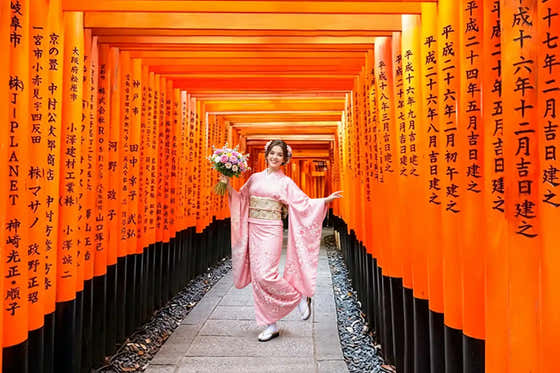
5. Fushimi Inari Shrine: Torii Gates & Spring Petals

Fushimi Inari is best known for its long tunnels of vermilion torii gates, but in spring the atmosphere feels noticeably softer.
As you walk up the paths, the contrast between the orange gates and scattered cherry blossoms becomes more subtle than dramatic. In some sections, petals fall across the stone steps and collect at the base of the pillars, changing the mood from energetic to calm.
Most visitors turn back after the main shrine, but continuing onto the Lower Loop is worth the effort. The crowds thin out, cherry trees lean closer to the path, and the walk feels more reflective than rushed.
Powered by GetYourGuide
6. Uji: The Riverside Haven of Zen and Matcha

If you find central Kyoto's crowds overwhelming, Uji offers a noticeable change of pace. Located just south of the city, it offers a refined sakura kyoto experience that combines 1,000-year-old history with the world's best green tea.
The Uji River banks are lined with over 2,000 cherry trees. The sight of the orange Uji-gawa bridges set against the pink canopy is breathtaking.

The "Byodo-in" Experience: The Phoenix Hall (featured on the 10-yen coin) is a UNESCO masterpiece. During spring, the weeping cherry trees near the purification pond offer a symmetrical reflection that is a dream for photographers.

Foodie Tip: Don’t just look at the flowers; taste them. Uji is famous for Sakura-Matcha soft serve and seasonal Cha-soba (green tea noodles) served with cherry blossom salt.
Powered by GetYourGuide
7. Nara Park: A Fairy Tale of Bowing Deer and Petals

Nara isn’t just a side trip—during cherry blossom season, it has a unique rhythm all its own. Over 1,700 cherry trees scatter across the park, and the combination of petals and wildlife makes it feel very different from Kyoto’s temples.
The wild deer are the real highlight here. You’ll often see them resting or nibbling under falling petals. If you want good photos, skip the main crowds around Todai-ji and head toward the Ukimido Pavilion on Sagi-ike Pond. The small wooden gazebo reflected in the water, framed by cherry trees, is much quieter and more atmospheric.
When interacting with deer, a little respect goes a long way. Many visitors offer shika-senbei (deer crackers), but approach slowly and bow slightly before presenting them. Walking toward the forest edge near Kasuga Taisha, the deer are calmer and more willing to linger under the trees—far less pushy than the ones near the main park entrance. Watching them carefully and moving deliberately makes the experience feel more like sharing the space than just feeding animals.
Powered by GetYourGuide
8. Nijo Castle: Shogun History & The "Night Sakura" King

Nijo Castle, once the Kyoto residence of the Tokugawa Shogun, has a different feel from the city’s temples. Its gardens are orderly, and the variety of cherry trees means there’s usually something in bloom even if you’re a few days off peak.
Inside the Ninomaru Palace, you can still hear the “nightingale floors” chirp underfoot—a reminder that this was once a working residence with clever security. After exploring the palace, the Seiryu-en Garden offers a mix of Japanese and Western landscaping, with Yoshino and weeping cherry trees scattered throughout. Walking slowly here, you notice how each tree frames a view differently depending on where you stand.
In the evening, Nijo-jo is known for its night illuminations. Projection mapping on the castle gates adds a modern layer to the historical setting, while day visitors can look out for rare Sato-zakura, late-blooming double-petal cherries that aren’t easy to spot elsewhere.
Powered by GetYourGuide
9. Yasaka Pagoda & Yasaka Koshin-do: The Most Instagrammable Alley

The heart of Higashiyama is where Yasaka Pagoda (Hokan-ji) rises above the skyline. In spring, a large weeping cherry tree drapes over the Sannenzaka slope, creating a quiet frame for the pagoda without needing any special angle.

Just a short walk away is Yasaka Koshin-do, often called the “monkey temple.” Thousands of colorful Kukuri-saru cloth monkeys hang from the walls and eaves. In spring, the combination of pink blossoms, dark wooden buildings, and the small bursts of color from the monkeys makes the streets feel layered and alive—subtle, but captivating if you take the time to look closely.
Powered by GetYourGuide
10. Philosopher's Path (Tetsugaku-no-michi): The Tunnel of Peace
The Philosopher’s Path follows a 2km stone walkway along a canal, named after a Kyoto University professor who used to meditate here. In spring, cherry trees line both sides, leaning in slightly over the water and creating a soft canopy of pink.
By early April, the petals start to fall and collect on the canal, forming floating layers that drift slowly downstream. It’s a quiet moment that changes from day to day—sometimes the water is nearly covered, sometimes just dappled with color.
Don’t just walk through. Pause at the small boutique cafés tucked into side streets. Many have second-floor seating that lets you look out at the canal and cherry trees from a slightly different perspective, offering a slower, more reflective way to enjoy the scenery.
The Perfect 3-Day Kyoto Sakura 2026 Itinerary
Kyoto is arguably the most atmospheric place in the world to experience cherry blossoms, but for first-timers, it can be overwhelming. During the peak of the 2026 season, the city’s population effectively doubles, and many of the most popular things to do in Kyoto become extremely crowded. If you don't have a plan, you'll likely spend hours stuck in bus queues or wandering into "tourist traps."
Based on our Top 10 Sakura Spots list, I’ve put together a 3-day itinerary that hits all the icons. The secret is efficiency: we use guided transport for the far-flung spots and leave the walkable areas for your DIY day. Here is how to see it all without feeling rushed.
3-Day Itinerary At-A-Glance
| Day | Focus | Transport | Key Landmarks |
|---|---|---|---|
| Day 1 | Gold & Ancient Icons | This Guided Route | Kinkaku-ji, Kiyomizu-dera, Uji |
| Day 2 | Deer, Mountains & Zen | This Seamless Tour | Nara Park, Arashiyama, Fushimi Inari |
| Day 3 | The Slow Walk | Walking (DIY) | Philosopher's Path, Gion, Nijo Night Entry |
Day 1: The "Gold & Ancient" Icons
Spots Covered: Kinkaku-ji, Kiyomizu-dera, Sannenzaka/Ninenzaka, Yasaka Pagoda, and Uji.

On your first day, I recommend focusing on the heavy hitters. However, don't waste energy navigating the local bus system—it’s notoriously congested near the temples and often runs behind schedule during spring.
- Morning: Start at Kinkaku-ji (The Golden Pavilion). In the morning light, the contrast of the gold leaf against the soft pink blossoms is unforgettable.
- Afternoon: Head to the Higashiyama District. Walk the famous Sannenzaka slope to see the massive weeping cherry tree, and frame your shots of the Yasaka Pagoda.
- End with: A trip to Uji to enjoy the riverbank blossoms and the world’s best matcha.
- Since these landmarks are on opposite sides of the city, many travelers find it most efficient to book this guided tour to handle all the driving and parking, allowing you to just focus on the scenery.
Day 2: Deer, Mountains & Zen
Spots Covered: Nara Park, Arashiyama, and Fushimi Inari.

Day 2 takes you to the outskirts of the city where the landscapes open up. These spots are iconic but spread across the Kansai region, making timing critical.
- Morning: Nara Park. Get there early to interact with the bowing deer under the petals. It’s the most peaceful time of the day before the midday rush.
- Afternoon: Arashiyama. Explore the Togetsukyo Bridge and the Bamboo Grove. The mountainside sakura here provides a perfect natural contrast to the temples of Day 1.
- Late Afternoon: Wrap up at Fushimi Inari Shrine. The vermillion gates look stunning in the "golden hour" light.
- Pro Tip: Trying to manage Nara and Arashiyama via train in a single day can result in over 4 hours of commuting. You can save significant time by joining this optimized day trip which connects these three major hubs seamlessly.
Day 3: The "Slow Walk" & Grand Finale
Spots Covered: Philosopher's Path, Maruyama Park, Gion, and Nijo Castle (Night Illumination).

For your final day, leave the vehicle behind and soak in the atmosphere on foot. We’ll end the night with a spectacular light show.
- Morning: The Philosopher’s Path. Start early (around 7:30 AM) at the north end. This 2km canal walk is a literal tunnel of flowers. It’s narrow and intimate—walking is the only way to truly appreciate the "Sakura Blizzard" effect.
- Afternoon: Maruyama Park & Gion. Walk south toward the Gion district. This is home to the famous "Queen of Sakura" (a massive weeping tree). Grab some street food from the stalls and enjoy a classic Japanese picnic vibe.
- Evening: Gion Shirakawa. Wander the canal in Gion as the traditional lanterns flicker on. It’s arguably the most romantic walk in Japan.
-
The Grand Finale: Nijo Castle Night Illumination. Take a quick 15-minute subway ride (Tozai Line) to Nijo-jo. During the sakura season, the castle transforms for the Nijo-jo Sakura Festival.
- The Experience: You’ll see over 300 cherry trees lit up with dramatic floodlights, often accompanied by stunning projection mapping on the historic castle gates. It is a completely different world from the daytime experience.
- Expert Advice: The night entry for Nijo Castle usually starts at 6:00 PM and requires a separate ticket. I recommend booking online in advance to skip the long ticket booth queues.
Choose Your Perfect 1-Day Shortcut
If your time in Kansai is limited, choosing a single, well-planned route can make the experience much smoother. These routes are designed to avoid the worst of the 2026 transit congestion, with direct pickup from Osaka or Kyoto, so you spend more time exploring and less time navigating trains and transfers.
Route 1: Spiritual Landscapes & Nature
- Route: Nara Park (deer and open grounds) → Uji (Byodo-in and tea culture) → Fushimi Inari (Torii gates).
- Why choose it: This peaceful Nara and Uji nature route stays away from the busiest parts of central Kyoto. The pace is calmer, with more open space and fewer bottlenecks, making it a good choice if you prefer a quieter first impression of the region.
- Check Availability & Prices for Route 1
Route 2: Classic Kyoto & Iconic Views
- Route: Kinkaku-ji → Kiyomizu-dera & Sannenzaka → Yasaka Pagoda / Koshin-do → Uji.
- Why choose it: This classic Kyoto route focuses on Kyoto’s most recognizable scenery. It’s ideal if photography is a priority and you want to see the landmarks that define the city’s image in a single day.
- Capture the Icons: Reserve Your Route 2 Seat
Powered by GetYourGuide
Route 3: Shogun History & Western Kyoto
- Route: Nijo Castle → Kinkaku-ji → Arashiyama (bamboo grove and Togetsukyo Bridge) → Fushimi Inari.
- Why choose it: This deep-dive Shogun heritage tour is a good balance of history and landscape. You move from the political center of the Tokugawa shogunate to the natural setting of Arashiyama, with less emphasis on shopping streets and more on context and scenery.
- Explore History: Join the Route 3 Heritage Tour
Powered by GetYourGuide
Route 4: The Kansai Highlights in One Day
- Route: Nara Park → Arashiyama → Fushimi Inari.
- Why choose it: Our bestselling Kansai essential triple-threat is designed for travelers with only one full day in the region. This route connects three of Kansai’s most recognizable sites without unnecessary detours.
- Book the Bestseller: See the Top 3 Icons in 1 Day
Powered by GetYourGuide
2026 Kyoto Sakura FAQ: Everything You Need to Know
What if I arrive too early or late for the peak bloom?
Don't worry—Kyoto’s varied geography means blossoms appear at different times. If you miss the main peak, head to the mountains in Kurama or visit Ninna-ji Temple, where the trees are famous for blooming a week later than the rest of the city.
How crowded is Kyoto during cherry blossom season?
It is the busiest time of the year. Popular spots like Arashiyama and Kiyomizu-dera will be at 100% capacity. This is why we recommend 1-day tours over public transport; our drivers use backroads and timed entries to avoid the worst of the gridlock.
How do I handle the massive crowds and bus queues?
Kyoto’s public buses become notoriously overwhelmed in April, with wait times often exceeding 45 minutes. The most efficient solution is to join the optimized Kyoto day trips, which uses private transport to bypass the transit mess and maximize your time at the actual spots.
Are there specific rules for photography in Kyoto?
Most temples ban tripods during the sakura season, so it's best to bring a fast lens for handheld shots. Also, keep an eye out for "No Photo" signs in Gion’s private alleys to respect local residents and avoid potential fines.
What should I pack for the April weather?
Daytime is pleasant, but temperatures often drop sharply to 5°C (41°F) after sunset. We recommend layering with a light down jacket so you stay comfortable while enjoying the spectacular night illuminations at Nijo Castle.
Where is the best place to see sakura in Kyoto without crowds?
Try Uji or the northern parts of the Philosopher's Path early in the morning. Also, smaller temples like Daigo-ji offer stunning views with slightly fewer tourists than Gion.
You might also be interested in ...